

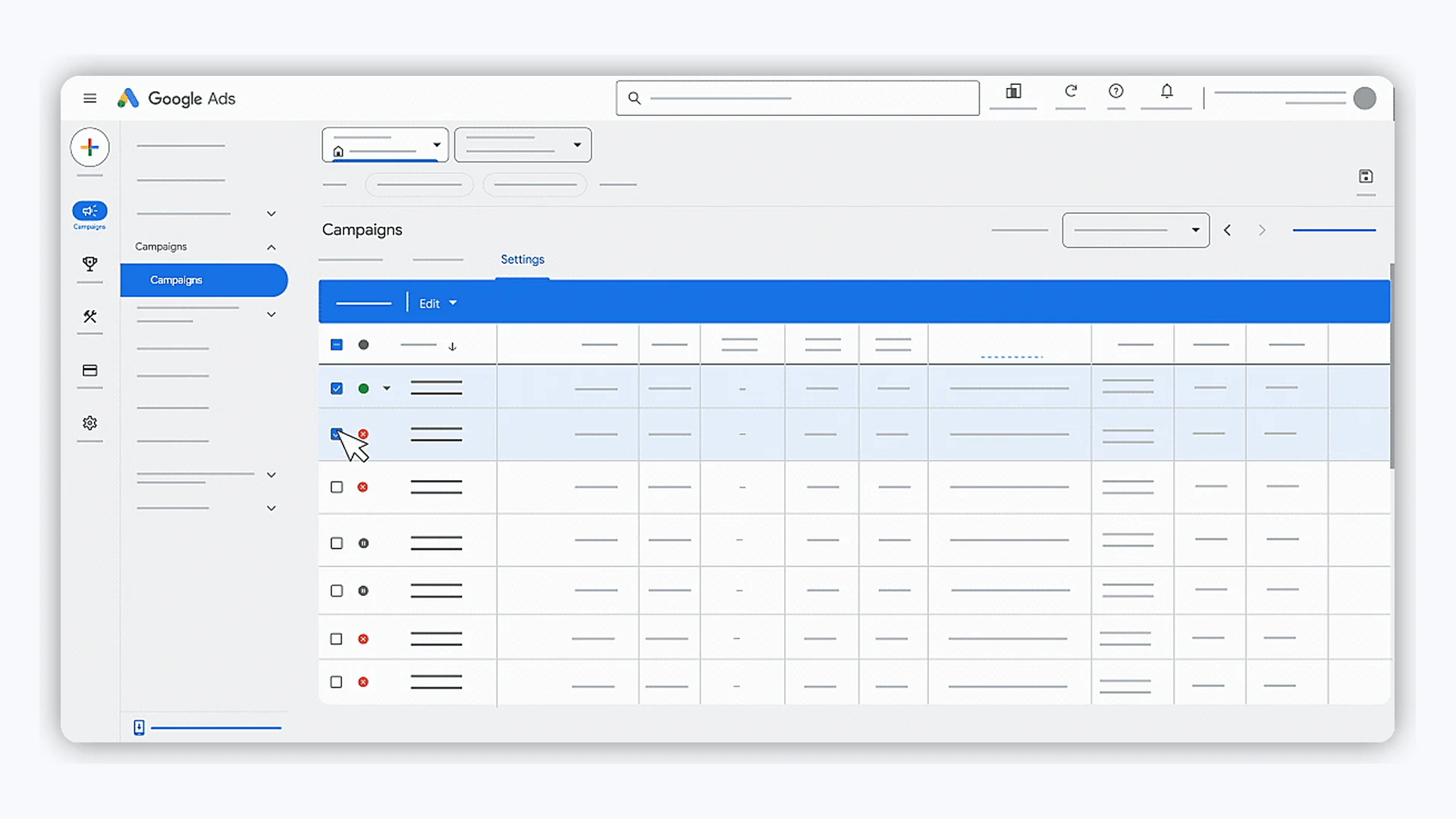
Google Ads is Google’s advertising platform, letting businesses pay to appear in front of people actively searching for what they offer, or browsing YouTube, apps, and other websites. Unlike SEO, where visibility is earned gradually through content and optimization, Google Ads works through a real-time auction: advertisers bid for placement, and Google decides which ads to show based on that bid combined with relevance and quality. If you’ve searched for something in Nepal — a modular kitchen contractor in Kathmandu, trekking gear near Thamel, or a coworking space in Pokhara — and noticed a “Sponsored” label above the usual search results, you’ve already seen this at work. For a business, it’s a way to reach potential customers relatively quickly rather than waiting for organic rankings to build.
Where Can Google Ads Appear?
Google Ads isn’t limited to the search results page. Depending on the campaign type a business chooses, ads can appear in several places: at the top of Google Search results (Search Ads), before or during YouTube videos (Video Ads), and across millions of partner websites and apps through the Google Display Network (Display Ads) — App campaigns work differently again, promoting an app itself across several Google properties rather than being a placement in the way Search, Video, or Display are. Each type suits a different goal — Search Ads tend to work best for capturing people who are already looking for a specific product or service, which is why this article focuses on how Search Ads work.
How Does Google Ads Work Step by Step?
An Advertiser Makes an Ad Eligible
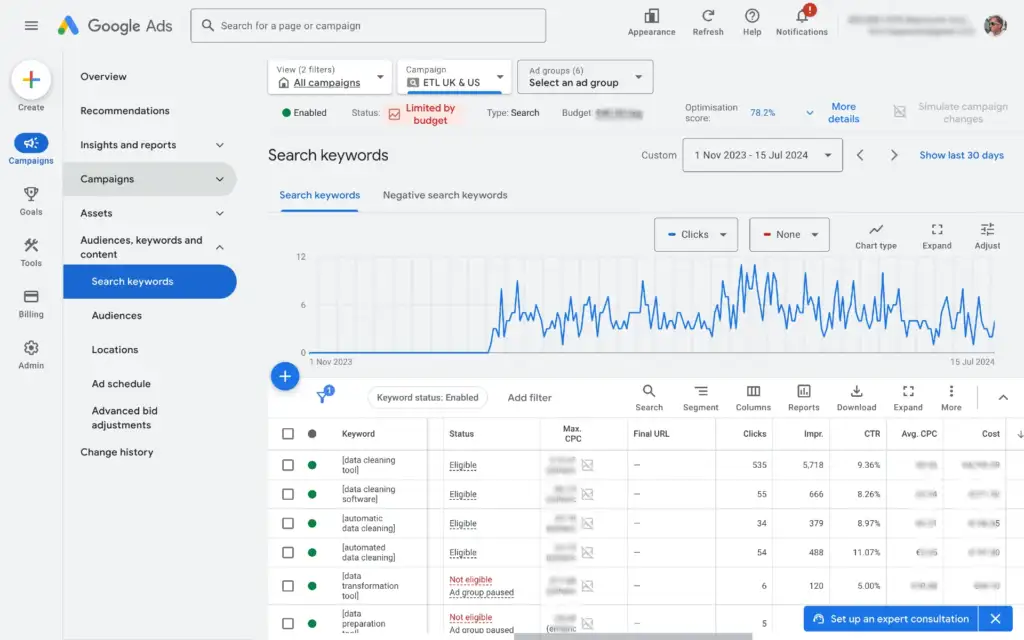
Before an ad can appear anywhere, an advertiser sets it up with a few core pieces: the keywords or audience they want to reach, the ad’s text or creative, a bid (what they’re willing to pay when someone interacts with the ad), and a budget. An ad must meet Google’s policies and relevant campaign and targeting conditions before it can be considered in an auction — but meeting those conditions alone doesn’t determine whether it actually shows, or where. That’s decided in the auction itself.
Google Identifies Relevant Ads
When someone searches on Google, the system scans all eligible ads and narrows them down to the ones relevant to that specific search — based on the keywords the advertiser chose and how closely they match what the person typed. Ads that aren’t a good match for the search simply aren’t considered, no matter how much the advertiser is willing to pay.
An Auction Determines Which Ads Appear
Among the relevant ads, Google runs an auction to decide which ones show and in what order, using a calculation called Ad Rank. This isn’t simply “highest bidder wins” — Ad Rank combines the bid amount with the ad’s quality at that moment (how relevant and useful the ad and its landing page are expected to be), the competitiveness of the auction, and the context of the search itself. An ad with strong relevance and a good landing page can outrank a competitor with a higher bid but weaker quality. This is why two businesses can spend very different amounts and still both appear, or why a bigger budget alone doesn’t guarantee the top spot.
The User Interacts With the Advertisement
Once an ad appears, the person searching can click it, ignore it, or scroll past it. If they click, they’re taken to the advertiser’s website or landing page, and the advertiser is typically charged for that click, regardless of whether it becomes a customer. What happens after the click — whether the page is useful, fast, and relevant to what they were searching for — determines whether that click turns into something valuable for the business, which is a separate question from how Google Ads decides which ads to show.
How Does Google Ads Work for a Nepali Business?
Consider a hypothetical example: a small modular kitchen business based in Kathmandu wants more inquiries from homeowners renovating their kitchens. The owner sets up a Search campaign targeting phrases like “modular kitchen Kathmandu,” sets a daily budget they’re comfortable with, and writes an ad highlighting their design consultations and installation service.
When someone in Kathmandu searches for “modular kitchen designs near me,” the business’s ad becomes eligible to enter that auction, competing against other kitchen and interior design businesses that have also chosen similar keywords. If the ad is relevant and the bid is competitive, it appears near the top of the results.
It’s worth separating what the owner wants from what the homeowner needs at that moment. The owner’s objective is renovation inquiries from people within their service area — that’s what shapes the keywords, the bid, and the budget. The homeowner clicking through, on the other hand, needs to quickly see whether this business actually does the kind of work they’re picturing: real project photos, the areas they serve, and a straightforward way to get in touch. An ad can win the auction and still fail the business if that second part — the landing page the click lands on — doesn’t meet the homeowner where they are. Assuming both line up, the homeowner reaches out or continues browsing other options.
Nothing here is guaranteed — the business might appear consistently for some searches and not others, and not every click will lead to an inquiry. What Google Ads offers this business is paid visibility relatively quickly to people actively searching for exactly this kind of service, rather than the longer runway organic SEO work typically needs to build the same visibility. (This example is illustrative, not drawn from an actual client campaign.)
What Should Advertisers in Nepal Know?
Cost is determined largely through the same auction process described above — advertisers are generally charged per click (CPC), and how much that costs varies based on competition for those keywords, ad quality, and the industry. We’ll cover Google Ads pricing in Nepal in detail in a separate article.
How Does Location Targeting Work?
Google Ads lets advertisers choose where their ads can appear geographically — a Kathmandu-based business can target available locations within its service area or use an appropriate radius, while a business shipping products nationwide might target all of Nepal, or focus on the cities where most of their customers already come from. By default, location targeting includes people who are physically located in the chosen area, people who are regularly there, and people who’ve shown interest in it — through searches or content related to that location, for example — rather than only people standing inside its borders at that moment. It’s also worth noting that targeting is generally set at broader geographic levels rather than every individual district being separately selectable, so advertisers should check what location options are actually available for their campaign type before assuming a specific area can be isolated.
Why Do Language and Device Considerations Matter?
Beyond location, it’s worth thinking about who will actually see and respond to an ad. Nepal’s audience spans multiple languages, and the language an ad is written in affects who understands and engages with it. Device matters too — a mobile visitor’s experience of a website can differ substantially from a desktop visitor’s, and a landing page that’s slow or hard to navigate on one can undo the value of an otherwise well-targeted ad, since most of the auction’s effort goes to waste if the person who clicks can’t easily do anything once they arrive. This is a conceptual consideration for planning an ad and its landing page, not a specific configuration step — the controls available for language and device depend on the campaign type and bidding strategy in use. Businesses wanting hands-on help planning and managing campaigns around these factors can work with Digital Raghu’s Google Ads team.
How Is Google Ads Different From SEO?

Google Ads and SEO both aim to get a business in front of people searching on Google, but they work in fundamentally different ways. SEO earns visibility organically — through content, site structure, and authority built over time, generally over a longer horizon — and doesn’t cost anything per click. Google Ads buys visibility directly through the auction described above, and can produce visibility relatively quickly once an eligible campaign is running, though where and how often an ad appears is never guaranteed. It also stops as soon as the budget or campaign does. Importantly, running Google Ads has no effect on a website’s organic search rankings; paying for ads doesn’t help or hurt where a site appears in the regular results. For a fuller look at how the two compare and when to use each, see our guide on SEO vs. Google Ads in Nepal.
Frequently Asked Questions
Does Google Ads Guarantee the Top Position?
No. Even with a strong bid, an ad’s position depends on its relevance and quality compared to competing ads in that auction. Position can also change from one search to the next.
Can Small Businesses in Nepal Use Google Ads?
Yes. Google Ads lets advertisers control their daily budgets, so small businesses can set spending according to their circumstances. Search Ads in particular are often used by small, local businesses to reach nearby customers actively looking for their services.
Does Every Google Ads Click Generate a Customer?
No. A click means someone visited the page — what happens next depends on the offer, the landing page experience, and whether the business follows up effectively. Clicks and customers are related but not the same thing.
How Is Google Ads Different From Boosting a Facebook Post?
Comparing specifically Google Search Ads to a boosted Facebook or Instagram post: boosting shows content to people based on their interests and behavior on that platform, whether or not they’re actively looking for something. Search Ads, by contrast, appear in response to what someone has typed into a search bar — reaching people at the moment they’re actively searching, rather than while they’re browsing socially. (Other Google Ads formats use different targeting methods.)
Understanding Google Ads Before You Begin
Google Ads gives Nepali businesses a way to appear in front of customers immediately, through a real-time auction that weighs both bid and quality. But visibility and clicks aren’t the same as results — what happens after someone clicks matters just as much as winning the auction in the first place. Once you understand how the mechanism works, the next step is putting it to use. Read our guide on how to boost sales with Google Ads in Nepal to go from understanding the platform to running a campaign that drives real business.